


Hey there, fellow car enthusiasts! As a brake caliper supplier, I've seen firsthand how crucial these components are in a vehicle's safety and performance. Today, I'm gonna dive into the nitty - gritty of how a brake caliper works in an anti - lock braking system (ABS).
Let's start with the basics. A brake caliper is a key part of your car's braking system. It's like the muscle that squeezes the brake pads against the brake rotor to slow down or stop your vehicle. In a normal braking system, when you press the brake pedal, hydraulic pressure is created in the brake lines. This pressure is then transferred to the brake caliper, which in turn pushes the brake pads against the rotor. The friction between the pads and the rotor is what slows down the wheels.
But when it comes to an ABS, things get a bit more complex. The main goal of an ABS is to prevent the wheels from locking up during hard braking. When a wheel locks up, you lose steering control, and your stopping distance can actually increase. That's where the ABS steps in to save the day.
The ABS consists of a few main components: wheel speed sensors, an electronic control unit (ECU), a hydraulic modulator, and of course, the brake calipers. The wheel speed sensors are placed at each wheel. They constantly monitor how fast each wheel is spinning and send this information to the ECU.
The ECU is like the brain of the ABS. It analyzes the data from the wheel speed sensors. If it detects that a wheel is about to lock up (meaning it's spinning much slower than the others), it springs into action.
This is where the brake caliper's role in the ABS gets really interesting. The ECU sends a signal to the hydraulic modulator. The hydraulic modulator is responsible for adjusting the hydraulic pressure in the brake lines that go to the brake calipers.
When the ECU senses a potential wheel lock - up, it commands the hydraulic modulator to reduce the pressure in the brake line going to the caliper of the at - risk wheel. This quick reduction in pressure makes the brake caliper release some of the force it's applying to the brake pads. As a result, the brake pads back off a bit from the rotor, allowing the wheel to start spinning again.
Once the wheel starts spinning at a normal speed relative to the others, the ECU then signals the hydraulic modulator to increase the pressure in the brake line again. The brake caliper responds by squeezing the brake pads harder against the rotor, applying more braking force.
This process happens in a split - second multiple times per second. It's like a dance between the ECU, the hydraulic modulator, and the brake caliper. This rapid cycling of increasing and decreasing the brake pressure at each wheel helps to keep all the wheels rotating while still providing maximum braking force. So, you can stop your car quickly and also maintain steering control, even on slippery roads.
Now, let's talk about the different types of brake calipers used in an ABS. There are floating calipers and fixed calipers.
Floating calipers are the more common type. They're lighter and less expensive to manufacture. In a floating caliper, the caliper itself can move slightly side - to - side. When the hydraulic pressure is applied, one side of the caliper moves towards the rotor, squeezing the inner brake pad against it. The reaction force then makes the caliper body move, which presses the outer brake pad against the other side of the rotor. These calipers work great in ABS systems as they can quickly adjust to the pressure changes commanded by the hydraulic modulator.
Fixed calipers, on the other hand, are more high - performance. They have pistons on both sides of the caliper, and they don't move. When hydraulic pressure is applied, the pistons on both sides push the brake pads against the rotor simultaneously. Fixed calipers provide more even braking force and are often used in high - end or performance vehicles. They also play a crucial role in ABS systems, offering precise control over the braking process.
As a brake caliper supplier, we offer a wide range of products to suit different needs. For example, we have the Suzuki Automotive Brake Calipers 19 - B3428. These calipers are specifically designed for Suzuki vehicles and are built to work seamlessly with the ABS. They're made from high - quality materials to ensure durability and reliable performance.
Another great product we have is the 18 - B5031 Chevrolet Specific Brake Calipers. Chevrolet owners can rely on these calipers to provide excellent braking power, especially in an ABS - equipped vehicle. They're engineered to handle the demands of Chevrolet's braking systems, ensuring that the ABS functions at its best.
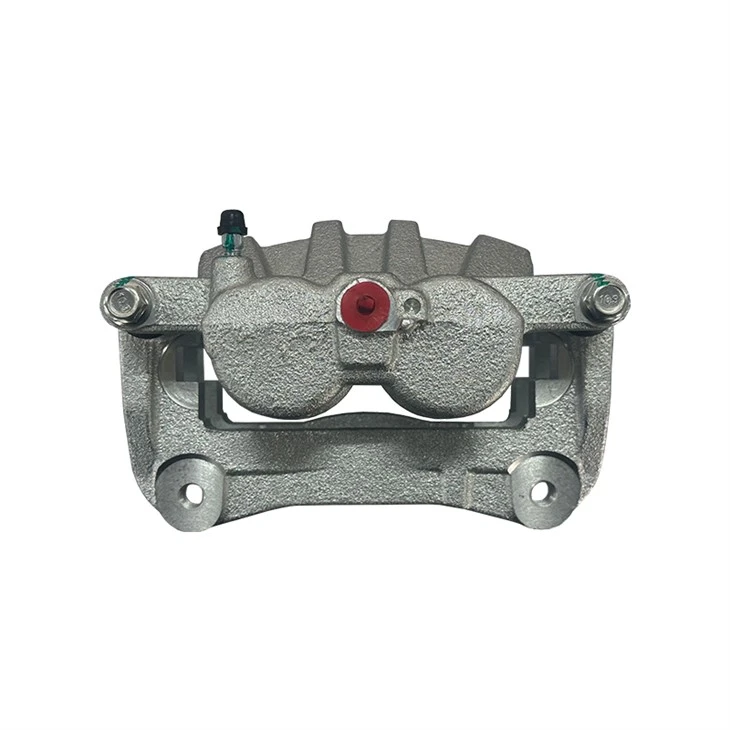
We also offer the 19 - B6274, 19 - B6275 Front Left & Front Right Brake Calipers with Brackets. These calipers are perfect for Lexus RX350 owners. They not only enhance the braking performance but also work in harmony with the ABS to keep you safe on the road.
If you're in the market for high - quality brake calipers for your vehicle's ABS, we're here to help. Our team of experts can assist you in choosing the right calipers that fit your specific vehicle and driving needs. Whether you're a car enthusiast looking to upgrade your braking system or a mechanic in need of reliable parts, we've got you covered. Contact us to start a discussion about your brake caliper requirements, and let's work together to keep your vehicle safe and performing at its best.
References
- Chilton's Auto Repair Manual
- Haynes Automotive Manuals
- Brake and Front End Magazine


